Melanie Pauli: “Training Principles Must Reflect the Specific Demands of the Women’s Game”
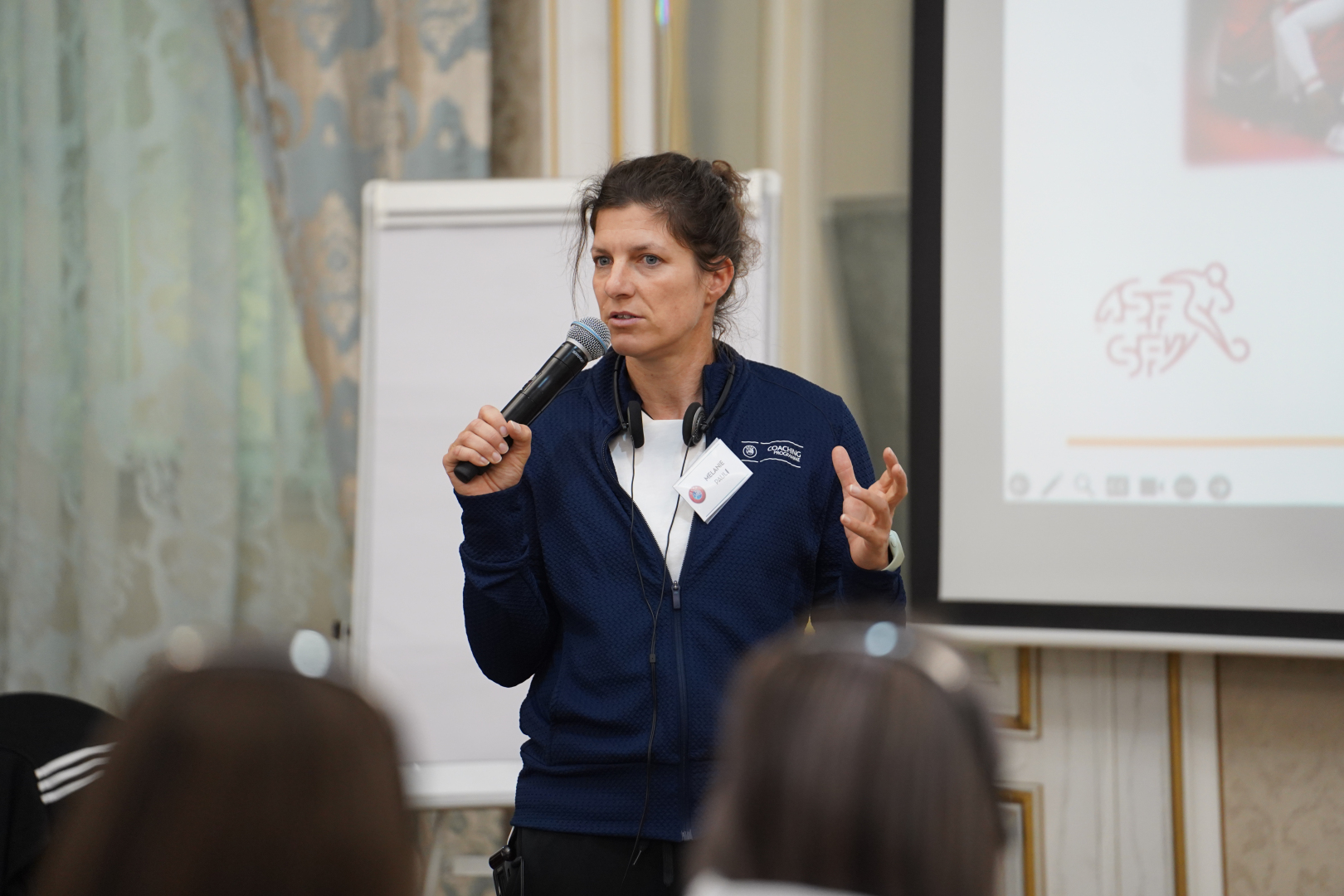
– We are very happy to be here. This is already my second visit to Kazakhstan. Today, we spent a lot of time discussing season planning and preparation, as well as discussing how to make the most of local conditions to support player development. We are increasingly testing different methods to understand which performance indicators can be improved – both in terms of quality and output. Tomorrow, we will link this work to injury prevention, an especially important topic in the women’s game. It is essential for us to understand what coaches can adjust in their preparation, which solutions help develop young players, and how to build a long-term development pathway that reflects the specific demands of women’s football.
At this stage, it is difficult for me to give a final evaluation of the specialists here, as we have not yet seen the full range of their practical work. But the group is certainly diverse: there are fitness instructors, strength and conditioning coaches, and head coaches. This makes the process highly valuable, because the most important thing is working together. I like the dynamic – participants ask thoughtful questions, show strong awareness, and the atmosphere is completely free of competition or hierarchy. It is a genuine exchange of experience, a discussion on how to apply core fitness principles in their own environments. Each participant is an expert in their own setting, and I truly appreciate this format of collaboration, collective growth, and building shared understanding.
UEFA is actively developing fitness-coaching education programmes, including the UEFA B Fitness and UEFA A Fitness licences. I was part of the working group where representatives from different countries discussed how to implement these programmes. As far as I know, Kazakhstan plans to start delivering the B-level licence in April 2026 – and this is a very positive step. The demands of the football industry are growing rapidly, especially in the women’s game. What took 25 years in men’s football is now happening in five to seven years in women’s football. High-quality education programmes and well-prepared specialists are essential to unlocking player potential and reducing injury risk.
Certainly, there are notable differences when working with women and men, but at the heart of every training process is the individual. We are similar, yet certain nuances influence movement, and movement influences injury patterns. That is why development approaches must reflect specific characteristics such as age, gender, level, and professional status. There are no exercises designed exclusively for men or exclusively for women. What matters is understanding who the coach is working with. Tomorrow, we will talk precisely about those small but important differences coaches should be aware of. Interestingly, most exercises used with girls are also suitable for boys – but not always the other way around. And that is a key point coaches need to understand.