Bauyrzhan Sagyndyk: “Advancing from the group will show us that we can compete with any opponent”
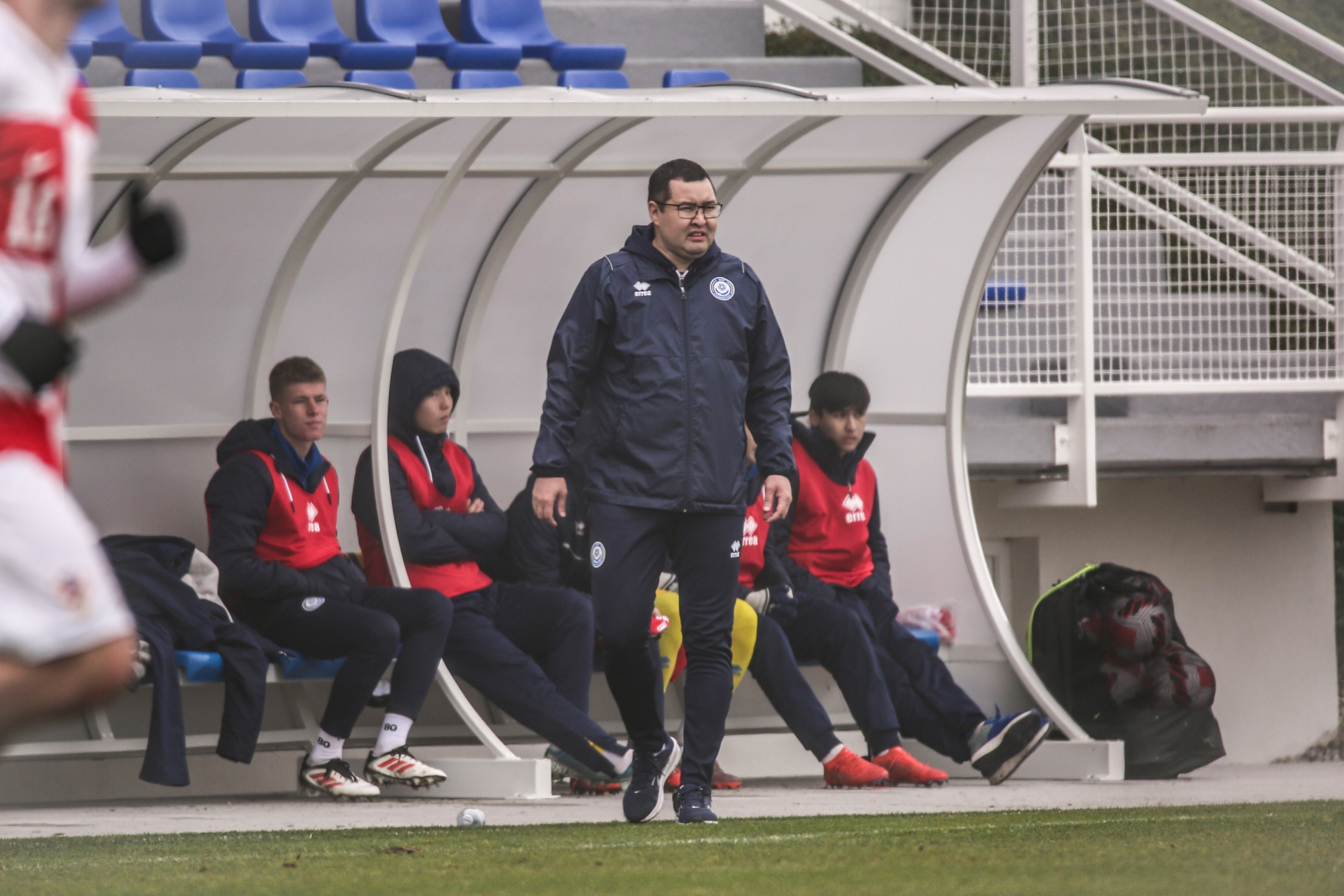
– How do you assess the results of the current qualification stage? Did the team achieve the goals set at the start of the cycle?
– The team’s performance in the qualification stage can be assessed positively. From the outset, we set a clear task—to advance to the next round—and the team accomplished it, finishing first in the group. There are areas where we still need to improve, but overall, the plan for this stage was successfully done.
– What impressed you most in terms of the players’ discipline, tactical understanding, and execution of the game plan? Which areas, in your view, still require work?
– What stood out most during the qualification matches was the discipline of the players, both on and off the pitch. The team followed the plan, executed instructions, and responded well to changes during the game. At the same time, there is still a lot of work to do in preparation for the second round. Overall, the players gained valuable international experience by competing against some of Europe’s strongest youth teams. Advancing from the group will provide them with additional motivation and a clear understanding that we can compete with any opponent and achieve results.
– What criteria did you use in forming the U-17 squad this season? Which player qualities were most important?
– When forming the squad, I focused on the players’ club experience, selected those who fit our tactical model, and considered their growth potential, willingness to work for the team, discipline, and ability to follow coaching instructions. I chose players who are not only strong now but also capable of progressing. One of the key objectives of the youth teams is to prepare the next generation for the U-19, U-21, and senior national teams.
– What experience did the team gain from the matches in Croatia? What was most valuable for the players’ development?
– The matches in Croatia provided very valuable game experience. The level of competition was higher—faster pace, greater intensity, better game understanding, and more physical challenges. The players faced a different style of football and had to adapt quickly. This strengthened the team and helped identify both our strengths and areas that need improvement.
– How do you assess the support from the KFF in preparing the team—from organizing training camps to international matches?
– KFF’s support has been extremely effective. We were provided with excellent conditions for training camps, international matches, logistics, and medical support. This allows the coaching staff to work without restrictions and prepare the team effectively. Such support has a direct impact on the team’s results.
– Do you notice the impact of KFF programmes and initiatives aimed at developing youth football? How does this impact the U-17 team?
– The structural changes are noticeable. Programmes for developing specialists are being actively implemented, and a systematic approach is being built across all departments. It is encouraging that regional academies are being constructed, modern stadiums are emerging, and clubs are moving to private management models. I am confident that this will yield good results in the future. The key is patience and steady progress toward set goals, without expecting immediate returns.
– How do you evaluate interaction with the KFF regarding scouting, youth player selection, and work with regional centres? How effective is the system?
– I assess the KFF’s involvement in scouting positively. Communication with the regions is improving, and there are now many tools to monitor player development—individual statistics from domestic competitions and international matches. The scouting system is evolving and becoming more structured, which helps in forming quality national teams.
– This year the team held training camps in Azerbaijan and Shymkent. How did these affect the performance in Croatia?
– The June camp and matches in Azerbaijan were key for player selection. We observed many players and assessed their individual qualities in international competition, which provided a lot of information for forming the squad. The September matches against Tajikistan in Shymkent allowed us to test the players’ readiness, reinforce their understanding of our playing principles, address mistakes, and strengthen team cohesion. Each stage served a specific purpose and helped ensure the team was in peak condition for the qualification stage.