Evgeniy Sveshnikov: “Our task is to build a system that keeps a steady stream of young talent flowing into the national teams”
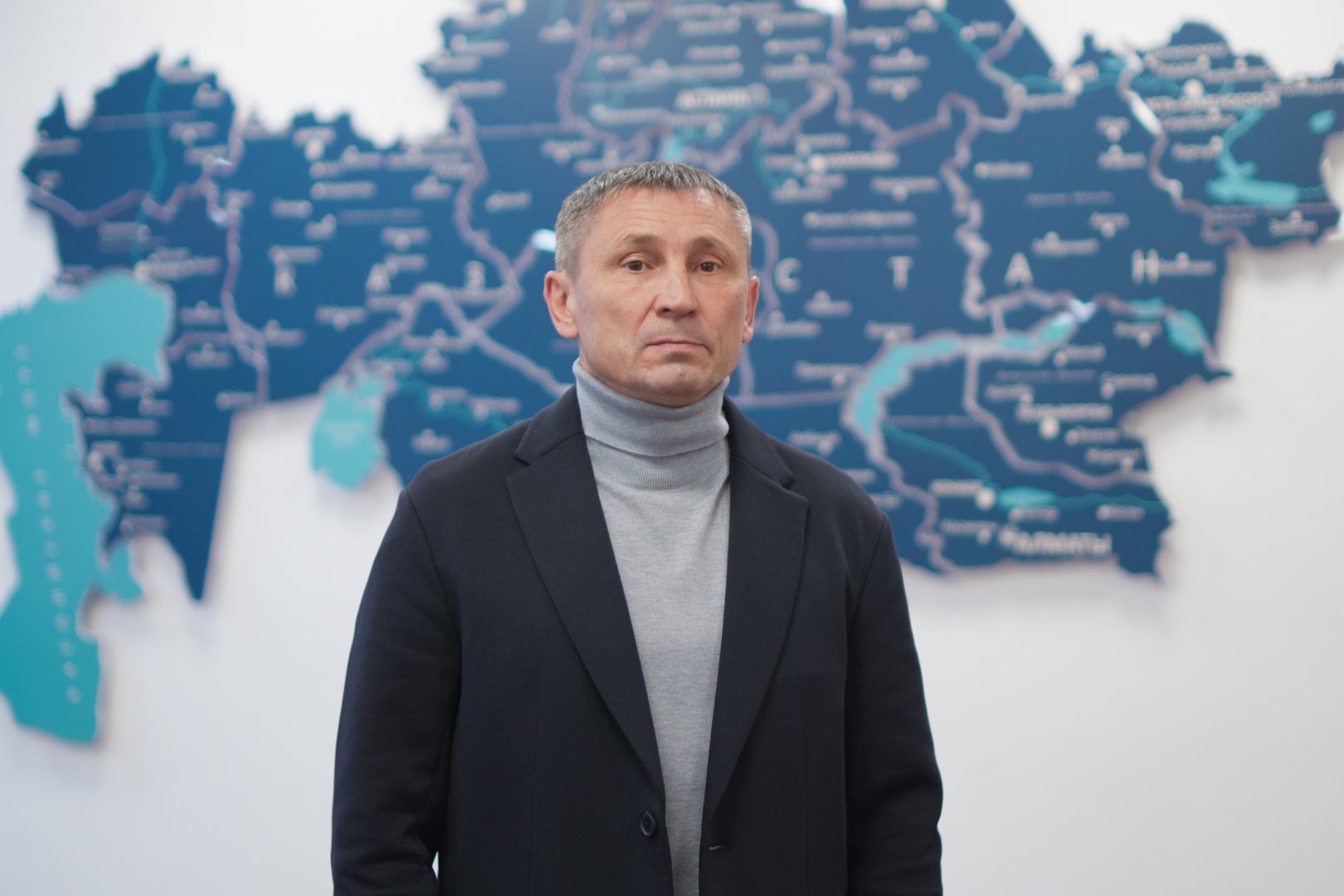
– This year, the Kazakhstan Football Federation established a new Department of Elite Youth Football. Could you explain this new direction in the development of youth football?
– The creation of this department is an important and timely step for the development of football in our country and fully aligns with the overall strategy of the KFF Technical Department. Our department is one of the key elements, as it forms the foundation for developing future national-team players. The main task is to build a modern, sustainable, and transparent system for identifying, developing, and supporting young players, ensuring a steady stream of young talent flowing into the national teams. We combine three areas—talent identification, scouting, and elite youth football—allowing us to build a unified development pathway for a player, from their first steps in football to the national team.
– Previously, scouting work in Kazakhstan was carried out by only a few clubs. How will this system operate within the KFF?
– Scouting activity used to be fragmented and depended on the initiative of individual clubs. Now we are creating a centralized national system. For the first time, we are introducing a three-tier structure: national scouts, regional coordinators, and local scouts. All specialists will follow unified methodologies and feed data into the central KFF database. This ensures full nationwide coverage and continuous monitoring of player development.
– The KFF Technical Center actively trains coaches and specialists. Will scouts also receive training? What requirements do FIFA and UEFA set in this area?
– Definetely, scout education is an essential part of our work. Together with the Technical Centre, we are launching a modular training programme for scouts. FIFA and UEFA requirements focus on a standardized approach: a clear selection methodology, objective evaluation criteria, and qualified specialists. We adapt these standards to Kazakhstan’s context and aim for our scouts to operate fully in line with international Talent ID principles.
– Building a system of such complexity requires international expertise. Does the KFF rely on models from other federations?
– Indeed. We study the experience of leading European associations and use materials from the FIFA Talent Development Scheme and UEFA’s methodological resources. However, our aim is not to copy but to create our own model, taking into account Kazakhstan’s geographic, infrastructural, and organizational characteristics.
– Do you plan to involve foreign specialists to train Kazakhstani staff?
– To provide our specialists with access to world-class best practices, it is crucial to engage international experts. This year, one of FIFA’s leading Talent ID experts, Steven Morrow from the United Kingdom, joined us. From 28 November to 1 December, he will conduct a specialized seminar in Astana for our scouts, covering modern Talent ID concepts, FIFA TDS requirements, and best practices in identifying promising players.
– How extensive will the scouting network be? Will it be centralized or regionally distributed?
– The network will have a mixed structure: centralized in management and methodology but regional in execution. We are forming a system of regional representatives who oversee local scouts. As a result, every region and province of Kazakhstan will be covered, while all data will be centralized within the KFF system.
– What criteria will be used to identify talented players? What will your staff focus on?
We use a comprehensive approach: age-specific player profiles, clear observable indicators across all blocks (technical, tactical, physical, psychological, mentality, and development potential), evaluation scales, standards for scouts and coaches, unified reporting templates, and consistent data-interpretation principles. This ensures transparency, clarity, and consistency across the entire system—from regional scouts to national-team coaches—and aligns the assessment process with international Talent ID principles.
– From what age does monitoring begin, and what is the upper age limit?
– Systematic monitoring begins at 10–12 years old, when a child’s basic qualities and attitude toward football can be assessed. Each age group then has its priorities:
U10–U12 – early monitoring
U13–U15 – active identification
U16–U19 – scouting and forming the national-team
U20–U21 – final stage before entering senior football
The upper age limit for monitoring within our department is U21.
– Is there already a database of players under observation? What data is collected?
– The database is being formed and is one of the key components of the new elite youth football system. We are creating a centralized player-monitoring structure that allows us to track the development of each promising footballer over time rather than rely on isolated matches. A broad range of data is collected: technical indicators, tactical characteristics, physical parameters, psychological traits, available video and analytics, and development dynamics. All of this will be included in a digital player profile, forming the foundation of the national talent database.
As part of this system, we are also introducing an electronic player passport, containing the full record of their football journey. The number of such passports is already growing, and with the expansion of the scouting network and our digital platform (EasyCoach), we expect significant growth in the player database nationwide. This will create a strong foundation for transparent and objective selection, improve analytics, and allow us to identify high-potential players at the right time.
– Will the scouting system support clubs or work exclusively for the KFF Academy?
– We are not competing with clubs. On the contrary, our task is to strengthen cooperation, share information, help clubs identify promising players, provide unified recommendations, and support clubs in standardizing their selection processes. The KFF Academy is part of the system, but our work is aimed at developing all of Kazakhstani football, not a single structure. We want every club—from professional teams to regional schools—to have access to modern tools for identifying and developing talent.
– Will you monitor players based abroad?
– Kazakhstan has a large diaspora, and we see significant potential in players with Kazakh heritage. A digital platform is being developed to simplify the search for players abroad and facilitate direct communication between the KFF and Kazakhstani footballers playing overseas. This will allow us to track promising players who may be considered for national-team selection from U17 to the senior squad.
– The U-17 and U-19 national teams have reached the elite round of European Championship qualifying. Will this result be considered the minimum benchmark?
– This is an excellent achievement and a clear indication of the potential of our players. We aim to make participation in the elite round a regular occurrence. However, our current focus is on building a sustainable system. A minimum benchmark will be defined once the structure operates fully and consistently.
– Does your department have the goal of reaching the final stages of major tournaments?
– Definetely, our strategic objective is regular participation of Kazakhstan’s youth and senior national teams in the final stages of international competitions. However, our top priority remains sustainable development: preparing players, increasing competition, and improving the quality of coaching and scouting. We are striving for results, but through systematic, long-term work.